
Wisconsin Libraries - Part 4
Saukville, Port Washington and Cedar Grove

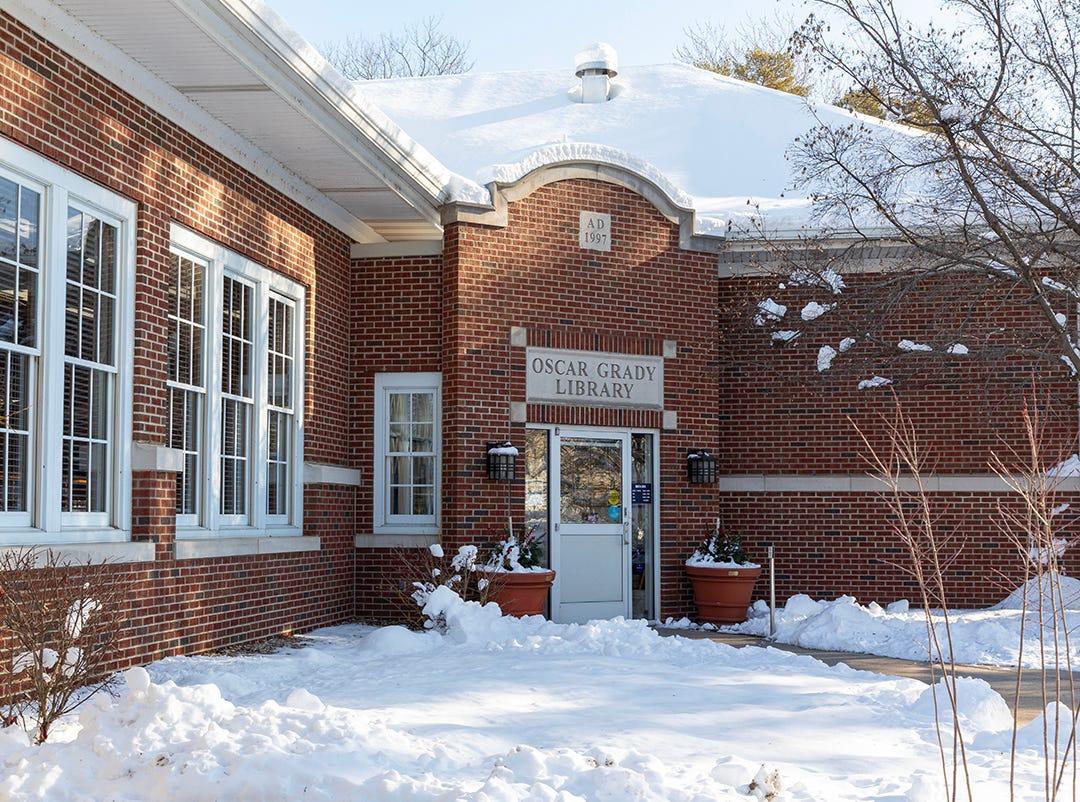
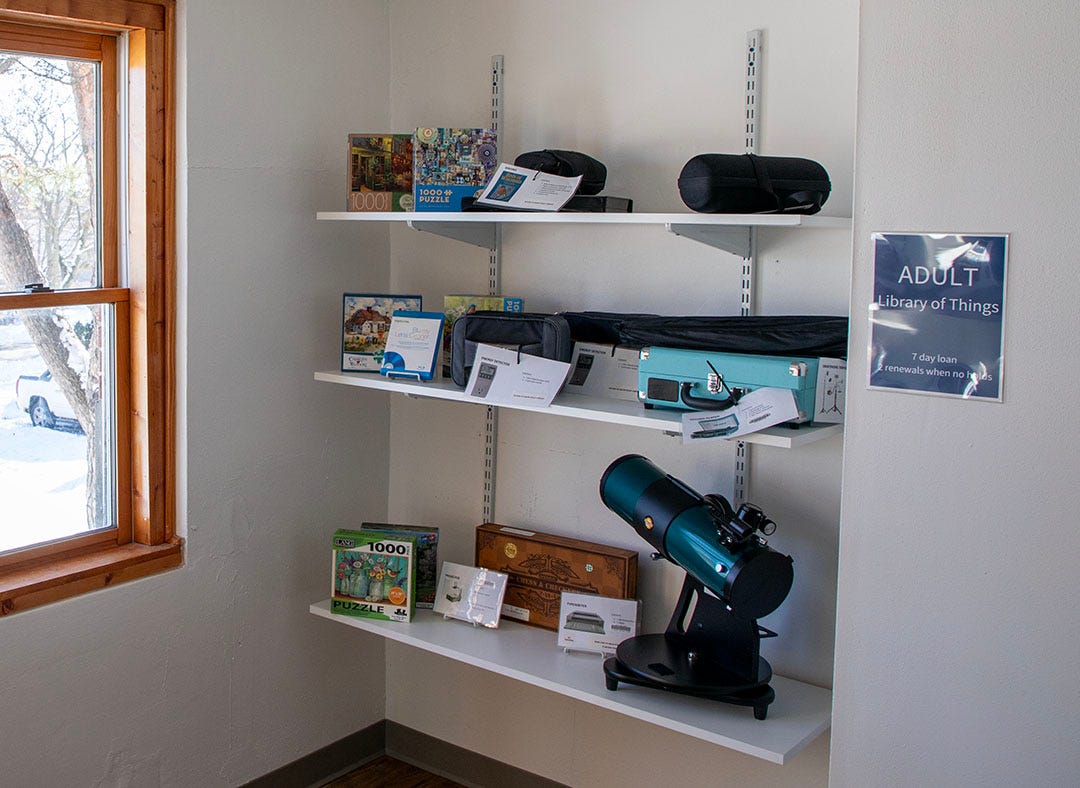
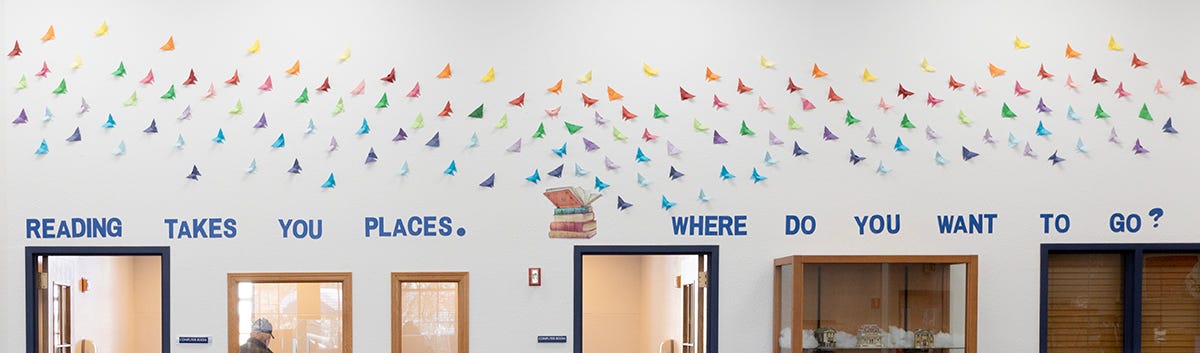
This was the busiest and most friendly library I visited on Saturday, Dec 6. Patrons were smiling and saying good morning to others, holding the door, and a staff member was giving an enthusiastic lady a tour. The parking lot was full, and the reading rooms were busy. I decided to skip photographing the reading room with all the lovely patrons in it for the sake of their privacy.
Today I discovered on Google Street View that I was at the back of the library, not the front, when I took the top photo. (Duh!) This is what I missed:
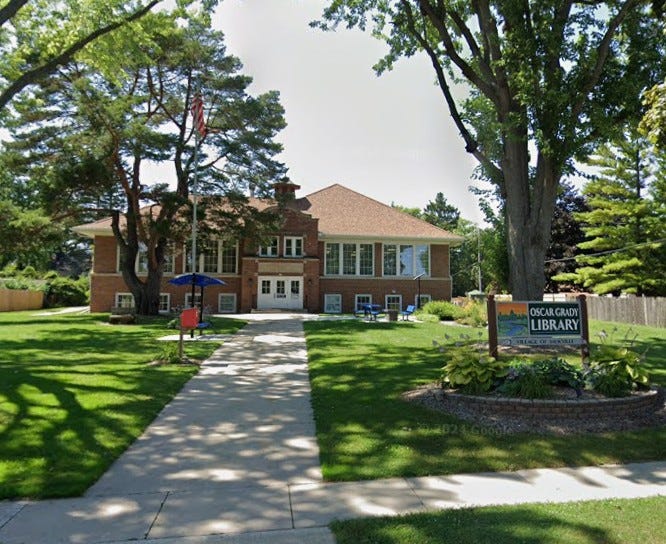
Oscar Johann Grady (1885-1964) left $5,000 to the Village of Saukville for a library when he passed away. Oscar was one of five brothers, two of whom ran a grocery store. He was regarded by many as reclusive, even a hermit, living alone in the woods along the Milwaukee River north of Newburg. It was said that he communed with the wild animals, built bird houses and mounted them on all the fence posts at River’s Edge and built several buildings of stone as well as an amphitheater. That wilderness near Newburg became the foundation for the Riveredge Nature Center. On the night of Nov. 15, 1964, as he was walking home from Saukville along Highway 33, Oscar Grady was struck by a car and killed. In 1972, the grand opening for the Oscar Grady Library was held on October 15th at 333 West Church Street. Chelene C. Golownia was appointed as the first librarian. The library was not funded by the Village of Saukville budget, but Chelene and many volunteers kept the library open. Fifteen years later it moved to its current location, the former Saukville Elementary School and American Legion Hall. In 1997, a new addition was built which doubled the size of the library. That’s the door I photographed.
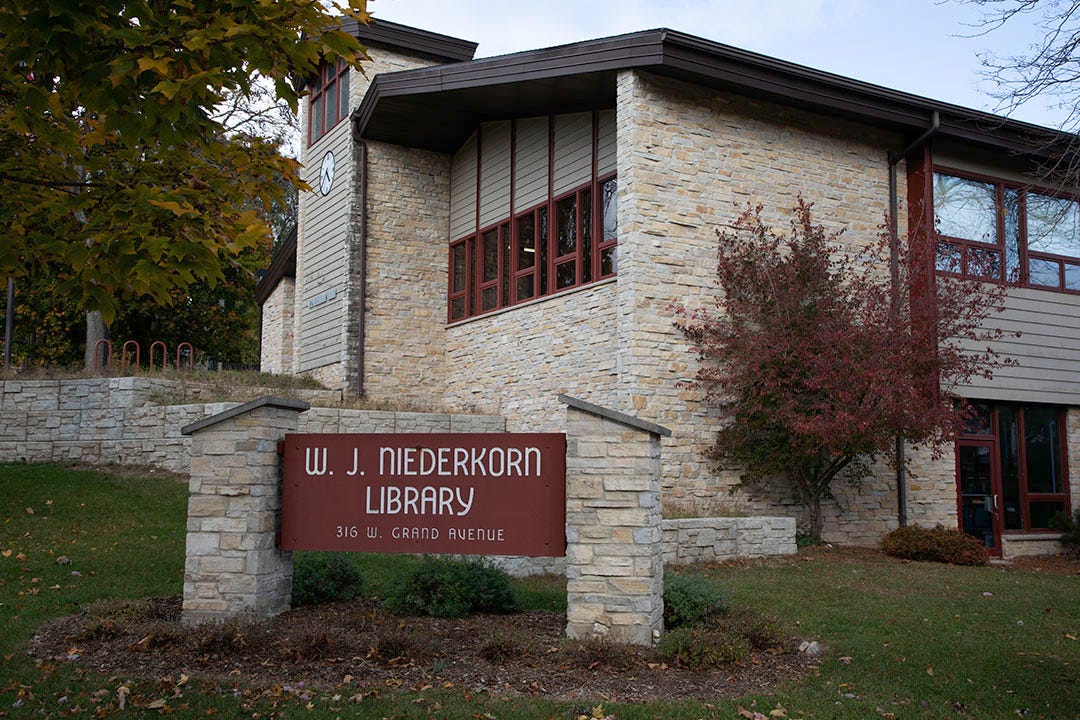
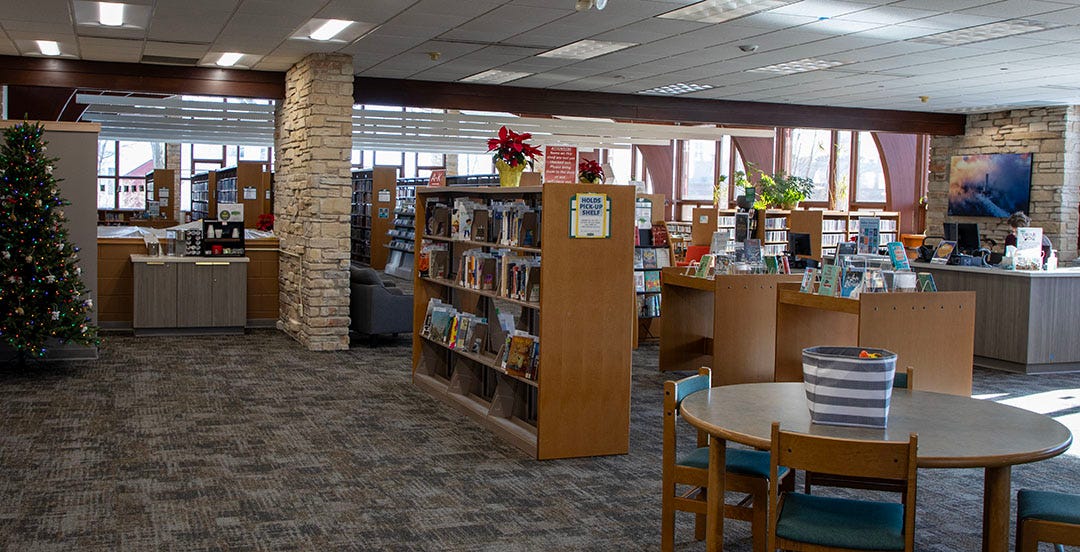
As of the end of 2025, the W. J. Niederkorn Public Library is being renovated*. I was only able to see the second floor which is housing most materials and a small selection from the Children’s Library while construction continues on the first floor. They recently demolished and are retiling the stairway and lower-level hallway. They expect the work to be finished in January 2026.
The first library began in the back of the Courtland Drug Store on the SW corner of Franklin and Main. The first librarian was Edgar Smith, the druggist. The library was a joint effort between the City of Port Washington and the Women’s Club. By 1908, the basement of the Courthouse provided much needed space. 600 borrowers frequented the public library in 1912; 294 of them were children. The librarian’s salary was $300.
After a move to City Hall in the 1920’s, the first library board was created. A building fund in the 1930’s changed the location of the library to the Wisconsin Street School where it resided for 30 years. In 1961, donations from William James Niederkorn (philanthropist) made possible an independent library, which is now the W.J. Niederkorn Library.
*In 2024 the library was awarded $1.1 million in Flexible Facilities Program grant funding through the Wisconsin Department of Administration, funded through the U.S. Department of Treasury Capital Projects Fund as part of the Biden-Harris Administration’s American Rescue Plan Act. This funding is allowing them to add many improvements to the library spaces and technology infrastructure.
What good can a book club do? Don’t they just sit around chatting and drinking wine once a month? Well, back in the forties they meant business!
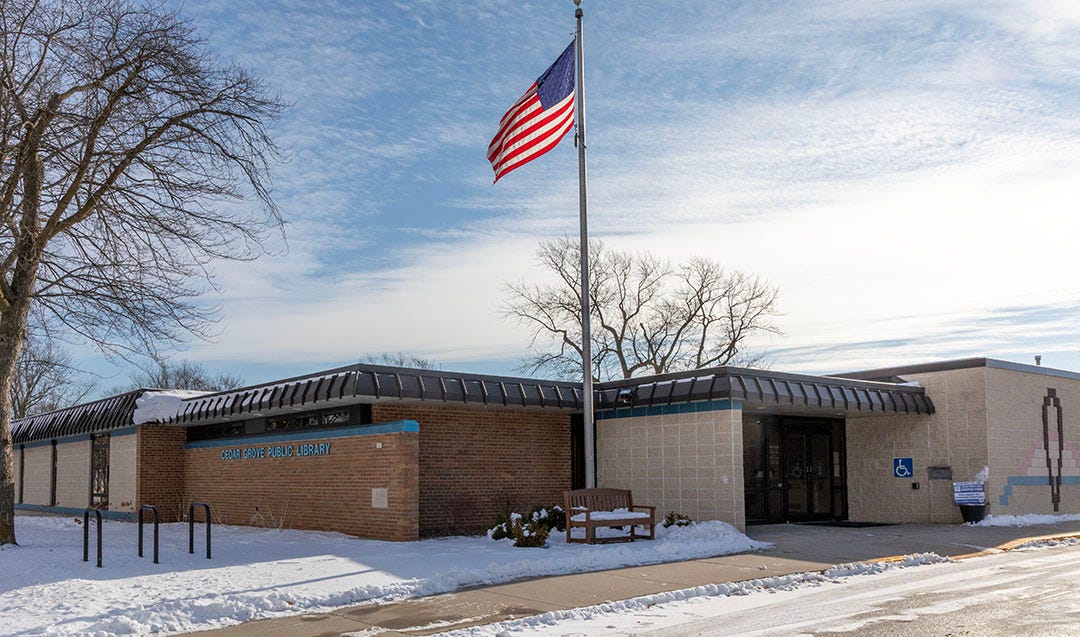
The Cedar Grove Public Library was founded in 1944 by members of the Cedar Grove Book Club. The members consulted with the Sheboygan Mead Library for guidance on acquiring and cataloging books and library operations. Soon after, the Book Club began a fundraising campaign. The local bank offered basement space rent-free for six months. On May 16, 1944, the Cedar Grove Public Library officially opened with 900 books on its shelves. More than 350 of the books were donated by members of the Cedar Grove community. The first librarian appointed was Mrs. William Theune, a retired elementary school teacher. 190 people signed up for a library card on the first day. 22 years later the book collection had grown to 6,113 books and they needed a new location. The village purchased the former Pantzer Lumber Company office building just south of the railroad tracks on the east side of Main Street. The books were moved by coaster wagon from the basement of the bank to the new location.
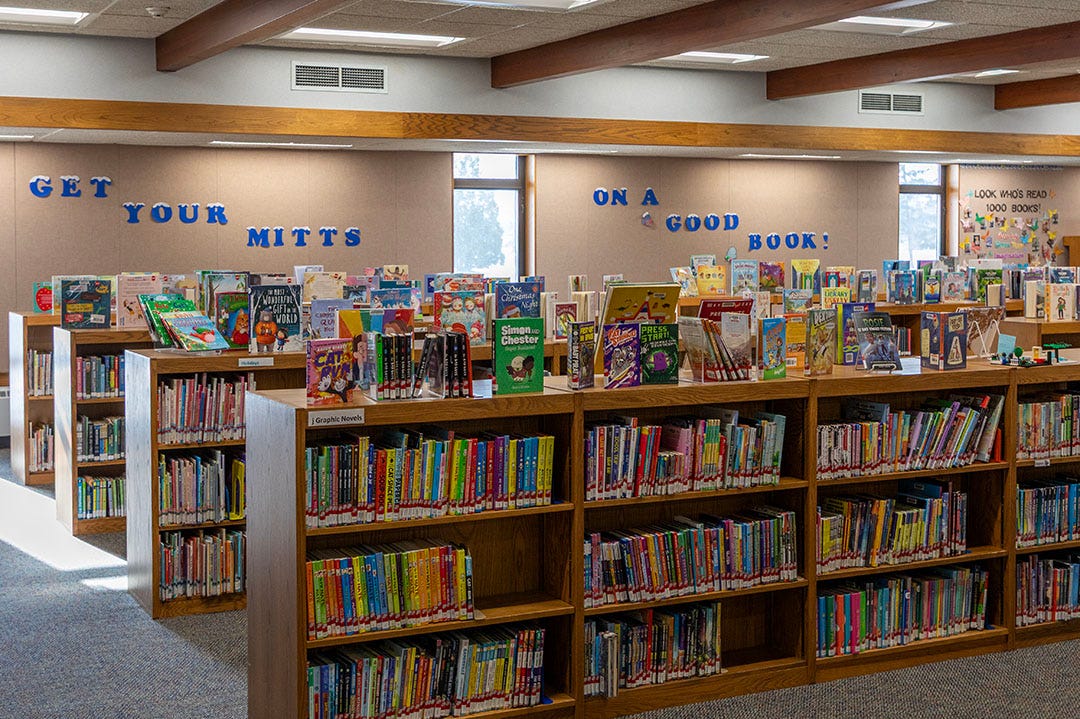
Nearly 30 years later the library had again outgrown its location. In 1993 the village purchased the former elementary school complex on Van Altena Avenue. They tore down the cafeteria, gymnasium, and older two-story structure of the complex and remodeled the newer, east wing of the school for a new public library. Taking a page from their own history, they organized an 84-coaster wagon train. In just thirty minutes, the wagon train moved the children’s collection to its new home. Dedication of the new facility took place on Saturday, August 27, 1994.